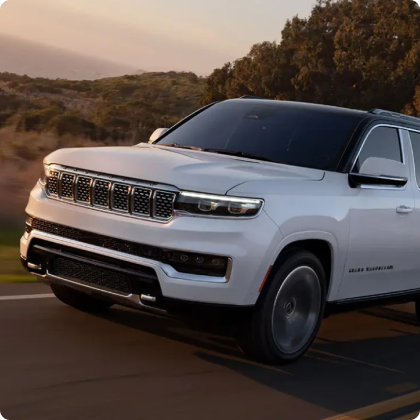
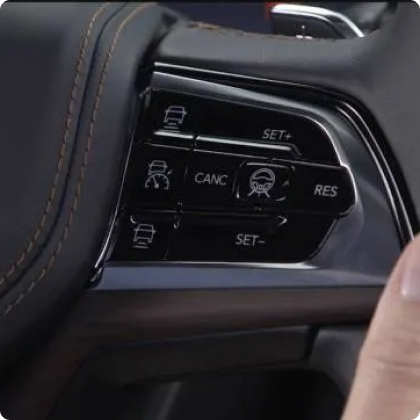
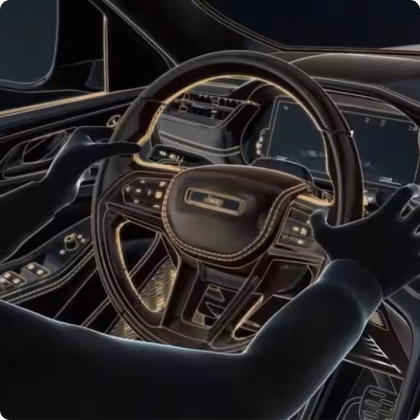
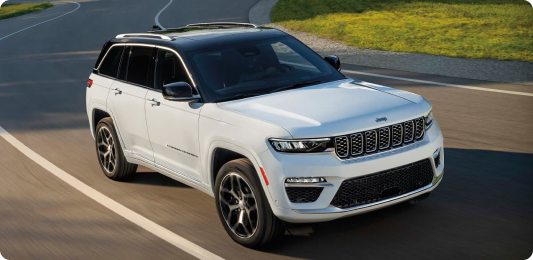
The base version is a hands-on system. Adaptive cruise control manages following
distance from the vehicle ahead, and lane centering keeps the Grand Cherokee positioned
correctly in its lane, but the driver must keep their hands on the steering wheel at all
times. Sensors built into the wheel monitor hand contact, and the wheel must be gripped
on the outside rather than on the inside spokes. The base version can be used on a wider
range of roads, since it does not require the more restrictive compatible-highway
condition that applies to the hands-free version. If the system detects that hands have
left the wheel, it issues an audible alert followed by two haptic brake jerk warnings,
and if the driver still does not respond, the system deactivates entirely and returns
control to the driver.
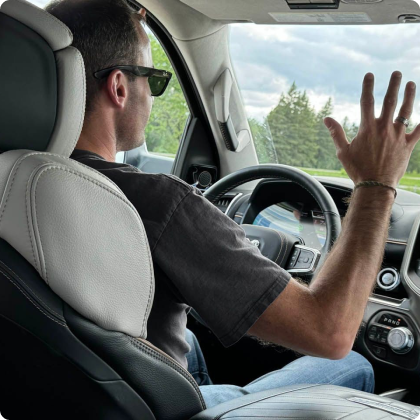
The hands-free version adds a driver monitoring camera mounted on top of the steering
column to the steering wheel sensors. The camera tracks eye position and attentiveness,
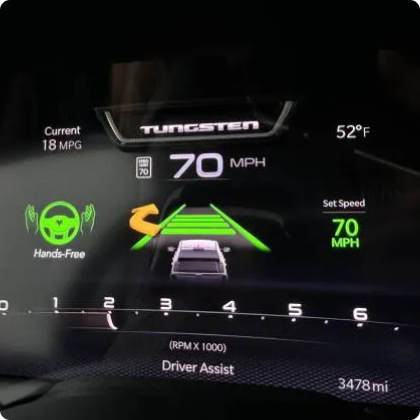
which is what makes hands-off operation possible. When the system is engaged on an
approved divided highway, the driver can take their hands off the wheel as long as their
eyes stay on the road. The system handles steering, speed, and following distance, with
the driver supervising. If the camera detects that the driver's eyes have left the road,
the system issues a seat vibration along with a red warning indicator, and if the driver
continues to be inattentive, the system performs a Stop-In-Lane maneuver, which brings
the vehicle to a controlled stop, shifts to Park, applies the Electric Park Brake, and
initiates an emergency call through the Assist and SOS system. The hands-free version
also requires an active Uconnect Connected Services subscription. A clear cellular signal
is needed for that connection to function on the road.