




Three-Row Jeep Comparison Table
The table below consolidates seating capacity and cargo capability across the three Jeep models that offer a third row.
Three Jeep models in the current lineup offer a third row of seating: the Grand Cherokee L, the Grand Wagoneer, and the Grand Wagoneer L. Every other model in the lineup, including the standard Grand Cherokee, the Wagoneer S, the Wrangler, the Gladiator, the Compass, the Cherokee, and the Recon, is a dedicated two-row configuration. Buyers cross-shopping the Grand Cherokee with the third row in mind sometimes assume the standard Grand Cherokee includes the seven-passenger option, but that is not the case. The Grand Cherokee L is the required step for third-row capacity within the Grand Cherokee family, and the Grand Wagoneer lineup covers the full-size segment above it.
The Jeep three-row picture changed for the 2026 model year with the retirement of the standalone Wagoneer. The Grand Wagoneer now serves as the entry point to the Jeep full-size segment and starts in the low sixty-thousands tier, which brings the cost of entry into the segment down meaningfully from where prior Grand Wagoneer generations sat. Buyers who would have considered the standalone Wagoneer in earlier model years now enter the Grand Wagoneer lineup directly, with the standard wheelbase and the extended-wheelbase Grand Wagoneer L as the two configuration paths.
The table below consolidates seating capacity and cargo capability across the three Jeep models that offer a third row.
| Model | Seating Capacity | Cargo Behind 3rd Row | Maximum Cargo |
|---|---|---|---|
| Grand Cherokee L | 6 standard / 7 with optional bench | 17.2 cu ft | 84.6 cu ft |
| Grand Wagoneer | 7 with captain's chairs / 8 with optional bench | 27.9 cu ft | 94.2 cu ft |
| Grand Wagoneer L | 7 with captain's chairs / 8 with optional bench | 42.6 cu ft | 116.7 cu ft |
The capacity progression across the three models reflects the segment differences. The Grand Cherokee L delivers three-row capability in a midsize footprint that fits most household garages and parking situations comfortably. The Grand Wagoneer steps up to full-size proportions with the cargo and passenger volume that come with the larger platform. The Grand Wagoneer L extends the full-size advantage further, adding nearly fifteen additional cubic feet behind the third row compared to the standard wheelbase Grand Wagoneer.
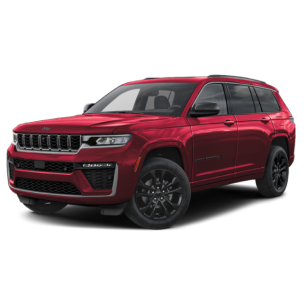
The 2026 Jeep Grand Cherokee L is the midsize three-row SUV in the Jeep lineup, built on an extended wheelbase compared to the two-row standard Grand Cherokee to accommodate the additional row of seating. Standard configuration includes second-row bucket seats, which gives the Grand Cherokee L a default capacity of six passengers across three rows. The optional second-row bench raises total capacity to seven passengers, and the bench configuration is the right choice for households that need the seventh seat regularly rather than the easier third-row access that the bucket seats provide.
The Grand Cherokee L offers the longest wheelbase in its midsize three-row class, which translates into best-in-class second-row legroom and competitive third-row space for the segment. Cargo capacity reaches 17.2 cubic feet behind the third row and 84.6 cubic feet with all rear seats folded. The trim ladder runs Laredo, Limited, and Summit for 2026, with the Summit configuration carrying the bulk of the cabin technology and luxury content including the McIntosh audio system and the Front Passenger Interactive Display where applicable. For families who need three rows in a footprint that fits standard household garages and daily-driving environments, the Grand Cherokee L is the right starting point in the Jeep lineup.
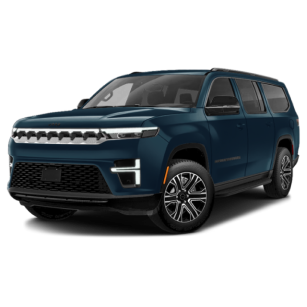
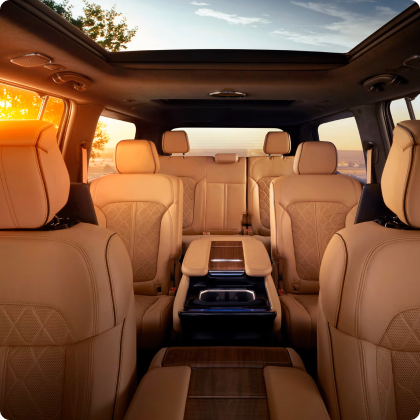
The 2026 Jeep Grand Wagoneer is the full-size three-row SUV in the Jeep lineup and the entry point to the Jeep full-size segment following the retirement of the standalone Wagoneer. Pricing starts in the low sixty-thousands tier, which represents a significant step down from where prior Grand Wagoneer generations entered the market and reflects the lineup consolidation under a single full-size nameplate. Capacity runs seven passengers with standard captain's chairs in the second row or eight passengers with the optional second-row bench, and the second-row configuration is the primary decision point for families weighing third-row access against maximum total capacity.
Cargo capability scales with the full-size platform. The Grand Wagoneer carries 27.9 cubic feet behind the third row and 94.2 cubic feet with all rear seats folded, both of which are meaningfully more than the midsize Grand Cherokee L delivers in the corresponding measurements. The interior is built around a premium-segment material specification, with leather upholstery standard across the lineup and progressively higher-grade leather appointments on the upper trims, including Nappa leather on the Summit Obsidian and quilted Palermo leather on the Summit Reserve. The cabin technology footprint can reach up to seventy-five inches of high-definition screen space across the dashboard depending on configuration. The trim ladder for 2026 runs from the base Grand Wagoneer through the Limited Altitude, Upland, Limited Reserve, Summit Obsidian, and Summit Reserve, with the higher trims carrying the McIntosh audio systems and the Front Passenger Interactive Display content covered in the cross-lineup feature pages. For buyers who need full-size three-row capability without stepping into the longer wheelbase, the standard Grand Wagoneer is the configuration that handles most household needs while remaining manageable in daily driving.
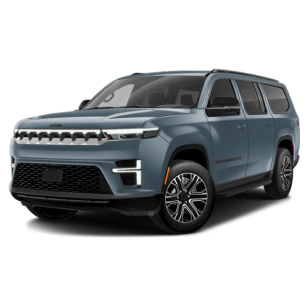
The 2026 Jeep Grand Wagoneer L is the extended-wheelbase version of the Grand Wagoneer, with a wheelbase approximately twelve inches longer than the standard model. The added length translates directly into cargo capacity behind the third row, with the L delivering 42.6 cubic feet in that space, which is the most cargo behind any third row in the Jeep lineup and a substantial gain over what the standard wheelbase carries. Maximum cargo capacity reaches 116.7 cubic feet with all rear seats folded, which is also the highest figure in the Jeep lineup.
Seating capacity matches the standard wheelbase at seven with captain's chairs or eight with the optional bench, since the wheelbase extension goes to cargo space rather than to additional passenger rows. The Grand Wagoneer L is the right choice for households that need maximum cargo capability alongside a full passenger load, particularly families that travel with significant luggage, sports equipment, or other gear that does not pack down small. The L is a less common configuration than the standard wheelbase Grand Wagoneer, and our team can confirm current availability and pricing on a specific trim and color combination at our showroom.
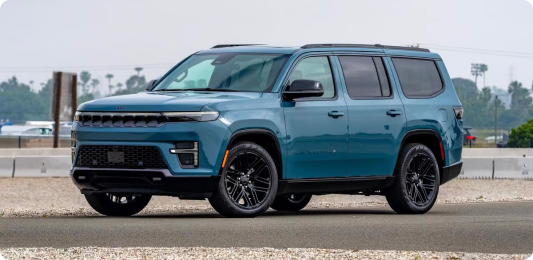
The third row earns its place most clearly for households that regularly carry six or more passengers, regardless of trip length. A daily school or activity run with multiple kids and the occasional friend along, a regular Sunday gathering that fills the vehicle with extended family, or a household configuration where parents, children, and grandparents share routine transportation are the cases where the third row pays off in practical use rather than in occasional trips. For households that fit one of those patterns, the question is not whether to step up to a three-row Jeep but which one fits the daily-driving environment and the household budget.
The Grand Cherokee L handles most Western Pennsylvania three-row needs without stepping into the full-size segment, particularly for households with one or two younger children using the third row regularly and a parent occasionally riding in the second-row bench. The Grand Wagoneer is the answer for households that want the larger platform with the cabin volume, premium interior content, and towing capability that come with the full-size segment, including buyers who tow regularly across the state for boating, camping, or hauling between Western Pennsylvania and destinations into Ohio. The Grand Wagoneer L extends the full-size case for households that need maximum cargo capability alongside the full passenger load, particularly multi-generational families taking longer trips or households where the third row is in regular use rather than reserved for occasional guests.
We can show you the Grand Cherokee L, the Grand Wagoneer, and the Grand Wagoneer L in our showroom in Hermitage, with the configuration options walked through against your specific household needs. Our team can put a Grand Cherokee L next to a Grand Wagoneer on the cabin floor to make the size difference concrete, walk through the second-row bucket-versus-bench decision on the Grand Cherokee L, and confirm current availability on a Grand Wagoneer L if the extended wheelbase is the configuration you want. If you are trading in another vehicle as part of the deal, you can start with a trade appraisal before your visit.
Three Jeep models offer a third row in the current lineup. The Grand Cherokee L is the midsize three-row SUV. The Grand Wagoneer is the full-size three-row SUV on the standard wheelbase. The Grand Wagoneer L is the extended-wheelbase version of the Grand Wagoneer. Every other Jeep model in the lineup is a two-row configuration.
No. The standard Grand Cherokee is a two-row SUV that seats five passengers. Buyers who want a third row in the Grand Cherokee family must step into the Grand Cherokee L, which is the extended-wheelbase three-row version of the model.
The Grand Cherokee L seats six passengers as standard equipment, with second-row bucket seats and a single seat in each bucket position. The optional second-row bench raises total capacity to seven passengers. The bench configuration is the right choice for households that need the seventh seat regularly, while the bucket seats provide easier third-row access and the more premium feel that often matches the higher-trim Grand Cherokee L configurations.
The 2026 Grand Wagoneer starts in the low $60,000 price tier, which brings the cost of entry into the Jeep full-size segment down meaningfully from where prior Grand Wagoneer generations sat. The lineup consolidation that retired the standalone Wagoneer is the structural change behind the more accessible entry point. Our team can confirm current pricing on a specific Grand Wagoneer configuration in our inventory.
The Grand Wagoneer L carries 42.6 cubic feet of cargo space behind the third row, which is the most cargo behind any third row in the Jeep lineup. Maximum cargo capacity reaches 116.7 cubic feet with all rear seats folded. The longer wheelbase extends the cargo bay by nearly fifteen cubic feet over the standard wheelbase Grand Wagoneer, which is the practical gain that defines the L configuration.
Towing capability varies by model and configuration. The Grand Wagoneer leads the three-row lineup with up to ten thousand pounds of towing capacity when properly equipped, which is a class-leading figure for the full-size three-row segment. The Grand Wagoneer L matches the towing rating of the standard wheelbase configuration. The Grand Cherokee L tows up to 6,200 pounds when properly equipped, with the rating consistent across both the new Hurricane 4 Turbo and the carryover Pentastar V6 powertrains. For buyers who tow regularly, the towing capacity is one of the meaningful differences between the midsize and full-size three-row configurations and often shapes the choice between the Grand Cherokee L and the Grand Wagoneer.
No. The all-electric Wagoneer S is a two-row SUV that seats five passengers. Buyers who want an all-electric Jeep with three rows do not currently have an option in the lineup, since the Wagoneer S is two-row only. The Grand Wagoneer is offered with the Hurricane twin-turbo gas powertrain, with a range-extended electric vehicle configuration also planned for late availability in the 2026 model year as the first range-extended sport utility application in the segment.
The standalone Wagoneer was retired for the 2026 model year. The Grand Wagoneer now covers the entire Jeep full-size segment, with a starting price that brings the cost of entry into the segment down meaningfully from prior generations. Buyers who would have considered the Wagoneer now enter the Grand Wagoneer lineup directly, with the standard wheelbase Grand Wagoneer and the extended-wheelbase Grand Wagoneer L as the two configuration paths within the consolidated lineup.
The Grand Wagoneer L is the extended-wheelbase version of the Grand Wagoneer, with a wheelbase approximately twelve inches longer than the standard model. The wheelbase extension goes to cargo space behind the third row rather than to additional passenger rows, which means the L carries 42.6 cubic feet behind the third row compared to 27.9 cubic feet on the standard wheelbase. Seating capacity is the same on both configurations at seven with captain's chairs or eight with the optional bench. Pricing on the L runs above the corresponding standard wheelbase trim, and our team can confirm the current premium on a specific configuration.
The right three-row Jeep depends on the household size, the daily-driving environment, and the budget. The Grand Cherokee L handles most three-row needs in a midsize footprint that fits standard garages and daily commuting comfortably. The Grand Wagoneer steps up to full-size proportions with the cabin volume and premium content for households that want the larger platform. The Grand Wagoneer L extends the full-size case with maximum cargo capability for households that travel with significant gear or use the third row regularly. Our team can walk through the configurations against the specific household needs at our showroom in Hermitage.
Mike Kelly Chrysler Dodge Jeep Ram in Hermitage carries the Grand Cherokee L and the Grand Wagoneer in regular inventory and can show the Grand Wagoneer L on configurations currently in stock or arriving. Our team serves drivers across Mercer County, Lawrence County, the Shenango Valley, and the broader Western Pennsylvania region, with the cross-comparison between the three-row Jeep configurations walked through against your specific household requirements.